
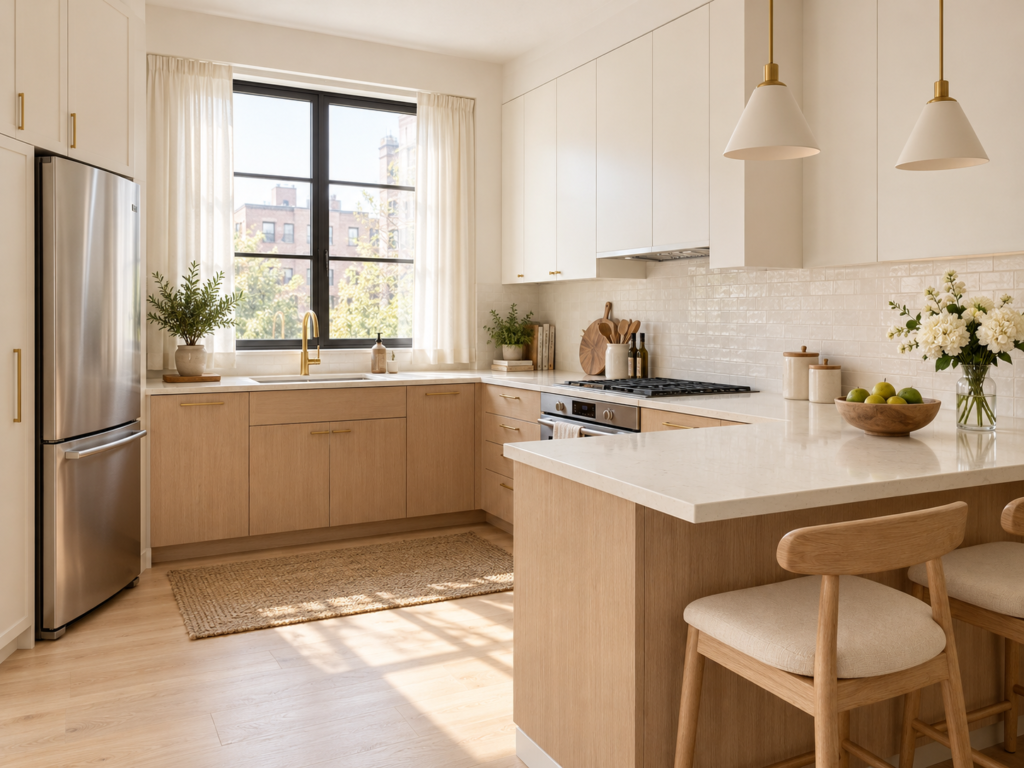
A small kitchen can be completely functional, but it leaves very little room for storage systems that do not work. When every cabinet is full and the counters become overflow space, cooking starts to feel harder than it should.
The most useful small kitchen organization ideas are not about fitting the maximum number of objects into every inch. They are about making frequently used items easy to reach, reducing duplicate clutter and using overlooked spaces more intentionally.
Table of Contents
1. Clear the Counters Before Adding Organizers
Start by removing anything that does not need to live on the counter. Appliances used once a month, unopened mail and extra containers can make the kitchen feel smaller before you have even begun organizing.
Keep the items that support daily routines, such as a coffee maker or frequently used utensil crock, and give everything else a more appropriate home.
2. Store Items Where You Use Them
Place mugs near the coffee area, cooking oils near the stove and food-storage containers close to the surface where you usually pack leftovers.
This simple zoning reduces unnecessary movement and prevents random storage decisions that make sense only because a cabinet happened to be empty.
3. Use Shelf Risers in Tall Cabinets
One of the simplest small kitchen organization ideas is using shelf risers to create another usable level above stacks of bowls or mugs. It is especially helpful in rental kitchens where you cannot add permanent shelving.
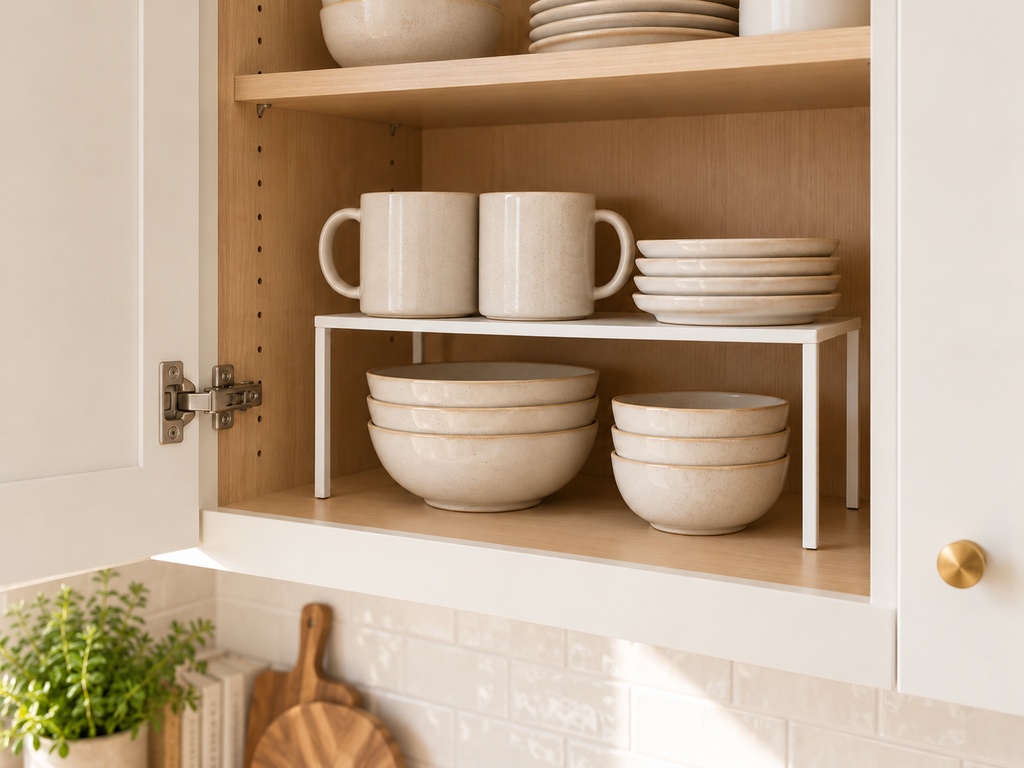
Measure the cabinet first and leave enough clearance to remove items comfortably.
For more ways to maximize cabinet space, IKEA’s guide to organizing kitchen cabinets and drawers offers practical examples of shelf inserts, drawer dividers and other simple storage solutions.
4. Add a Turntable for Deep Corners
A turntable can make oils, sauces, condiments or pantry staples easier to see in a deep cabinet. Instead of moving several bottles to reach the one at the back, you can rotate the group toward you.
Use it for a contained category rather than treating it as a catch-all for unrelated items.
5. Divide Drawers by Function
Drawer dividers help utensils, tools and small accessories stay in clear groups. Keep everyday cutlery separate from cooking tools, and give tiny items such as clips or measuring spoons a defined section.
A drawer does not have to be filled edge to edge. A little extra room makes it easier to keep the categories intact.
6. Use the Inside of Cabinet Doors
The inside of a cabinet door can hold lightweight items such as measuring spoons, cleaning gloves or small wraps with the right renter-friendly organizer.
Avoid anything too heavy that could strain hinges or prevent the door from closing properly.
7. Store Pans and Cutting Boards Vertically
Vertical dividers make flat items easier to remove without lifting an entire stack. Use them for baking sheets, cutting boards, pan lids or shallow pans.
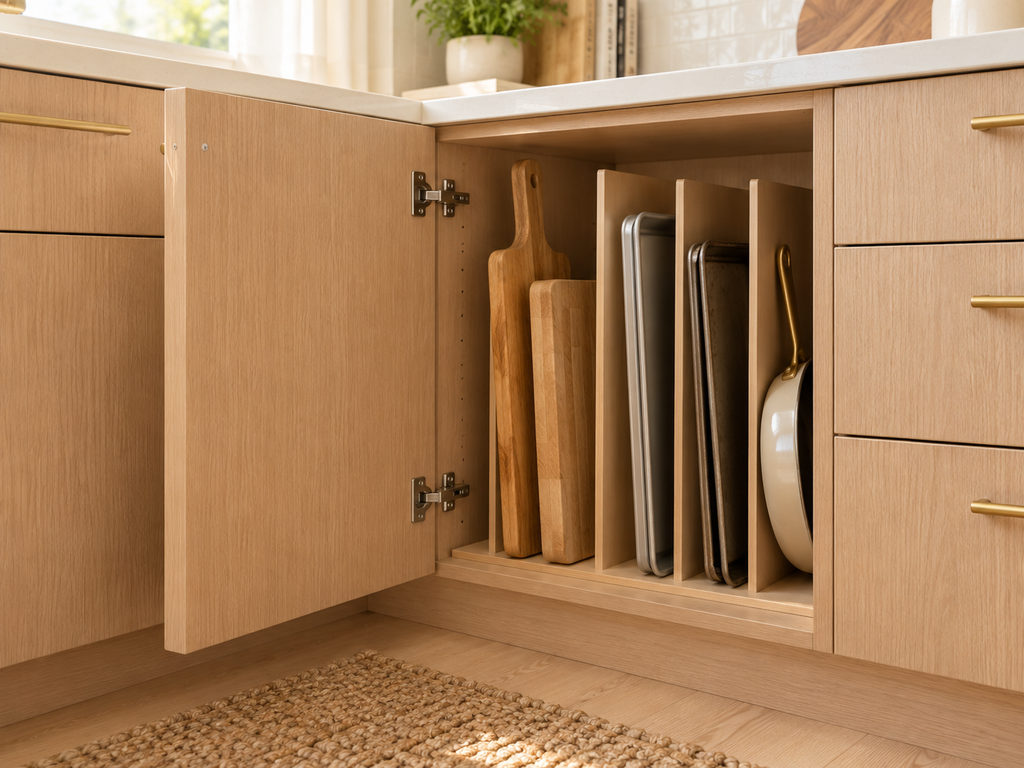
This setup is particularly useful in lower cabinets where stacked items tend to disappear at the bottom.
8. Create a Small Pantry Zone Even Without a Pantry
Choose one cabinet, shelf or rolling cart to hold dry goods together. Keeping pantry staples in a defined area makes it easier to see what you have and plan groceries.
Group similar foods together and place older items toward the front so they are used first.
9. Decant Only When It Truly Helps
Matching containers can look beautiful, but transferring every grocery item is not necessary. Decant foods when the original packaging is bulky, difficult to reseal or hard to stack.
Keep labels or expiration information where needed. Organization should save time, not create another weekly chore.
10. Use Clear Bins for Small Packets
Small packets can disappear easily on a shelf. A clear bin can gather snacks, seasoning envelopes, tea, baking supplies or other loose items into one visible category.
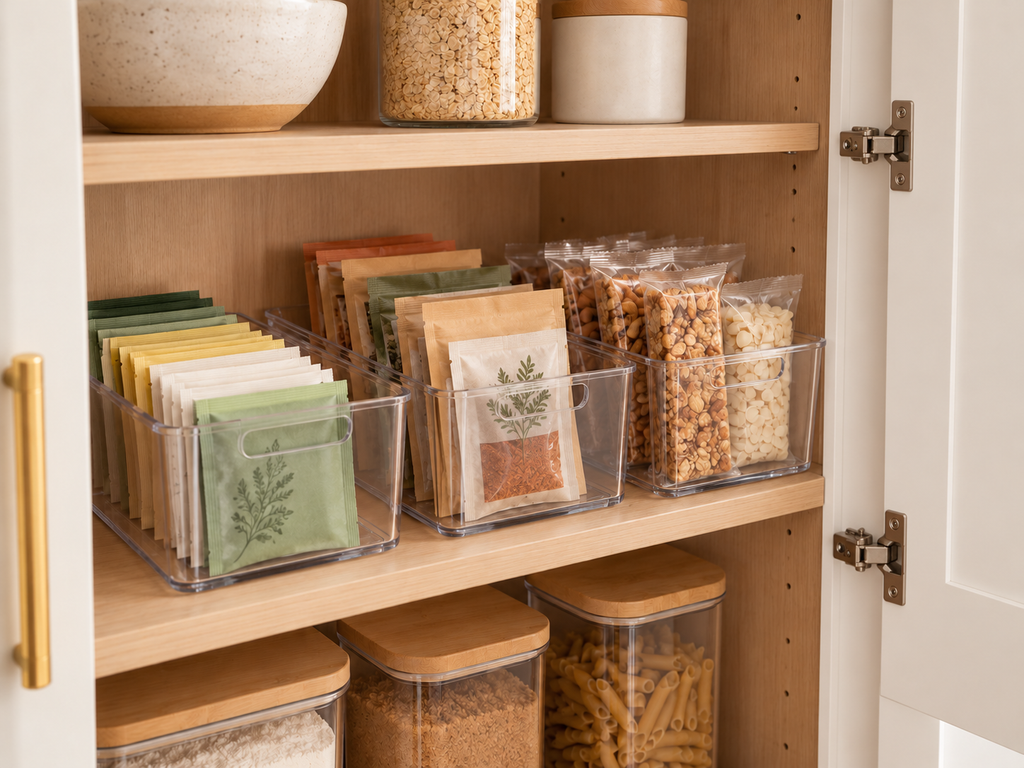
Choose bins that are easy to pull out completely so you can reach what is at the back.
11. Make Use of the Space Above Cabinets Carefully
If your cabinets stop below the ceiling, the top can hold lightweight items you rarely use. Attractive baskets can contain seasonal serveware or extra kitchen linens.
Avoid turning this area into long-term clutter. Keep the number of containers limited and make sure they are easy to clean around.
12. Hang Frequently Used Tools
A rail, magnetic strip or hook system can free drawer space for frequently used utensils when your lease and wall surface allow it.
Keep the display edited. Hanging every tool you own can create more visual clutter than it solves.
13. Use a Rolling Cart for Flexible Storage
A slim cart can act as a pantry, coffee station, baking shelf or produce holder. Because it moves, it is useful in kitchens where cabinet storage is limited but floor space is available in only one spot at a time.
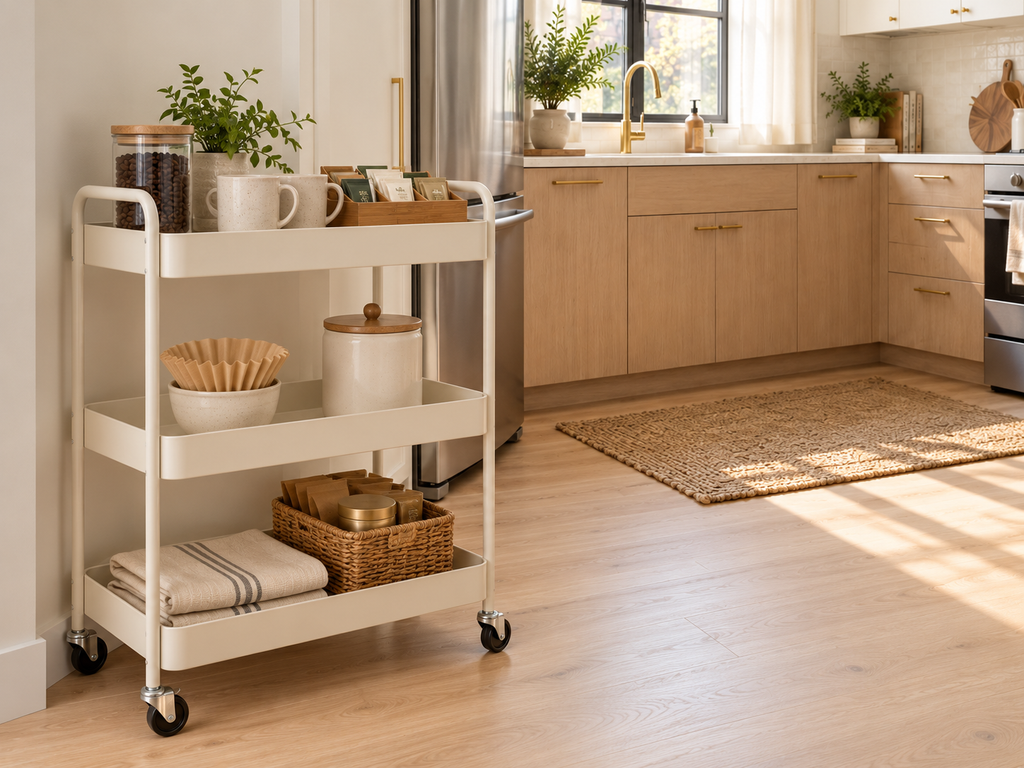
Choose a purpose for the cart so it does not become a place for unrelated overflow.
For more ways to make limited space work harder beyond the kitchen, explore our 15 small apartment organization ideas.
14. Keep Backup Supplies Separate From Daily Supplies
If you buy extra paper towels, pantry staples or cleaning products, store the backup quantity away from the main working zone when possible.
Daily cabinets are easier to use when they hold what you need now rather than every spare item you own.
15. Reset the Refrigerator and Pantry Before Grocery Day
A quick weekly check prevents forgotten food from creating clutter. Move older items forward, wipe obvious spills and note what needs to be used soon.
This small habit supports both organization and meal planning, and it reduces the chance of buying something you already have hidden at the back.
A Small Kitchen Should Be Easy to Use
Good kitchen organization is less about perfect rows of containers and more about reducing friction. When you can reach a pan without unstacking five others and see your pantry before buying groceries, the kitchen feels larger because it works better.
Choose one cabinet or drawer that frustrates you most and improve that first. Practical systems built around your own habits will last much longer than a complete makeover that looks beautiful but is difficult to maintain. The most effective small kitchen organization ideas are the ones that make everyday cooking and cleanup easier, without creating more work to maintain.