
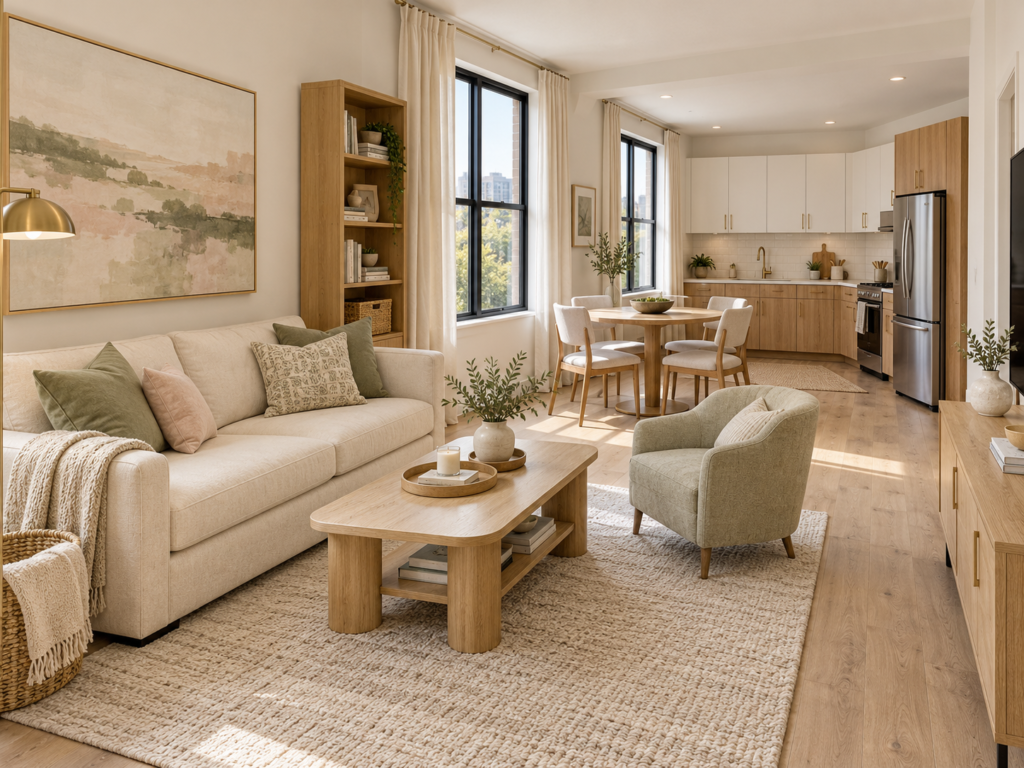
Living in a small apartment can make everyday clutter feel bigger than it really is. A few shoes by the door, mail on the counter or an overflowing bathroom shelf can quickly make the whole space feel busy. The answer is not necessarily to own almost nothing. It is to give the things you use a sensible place to live.
The best small apartment organization ideas are the ones that make your routines easier. They help you find what you need, reset the room quickly and enjoy the space you already have. Instead of trying to organize every corner at once, start with the areas that create the most friction in your day and build from there.
Table of Contents
1. Give Everything a Real Home
Clutter often collects because an item does not have a clear destination. The keys land on the kitchen counter, the tote bag moves from chair to chair and unopened mail forms a small pile because there is no obvious place for any of it.
Choose a specific home for the things you reach for every day. A shallow tray can hold keys, a wall hook can take the everyday bag and a slim file holder can contain mail until you sort it. The goal is not to create a complicated system. It is to make putting something away just as easy as leaving it out.
2. Use Vertical Space Before Taking Up More Floor Space
When floor space is limited, look upward. Tall bookcases, floating shelves, wall hooks and over-the-door organizers can add useful storage without making the room feel crowded underfoot.
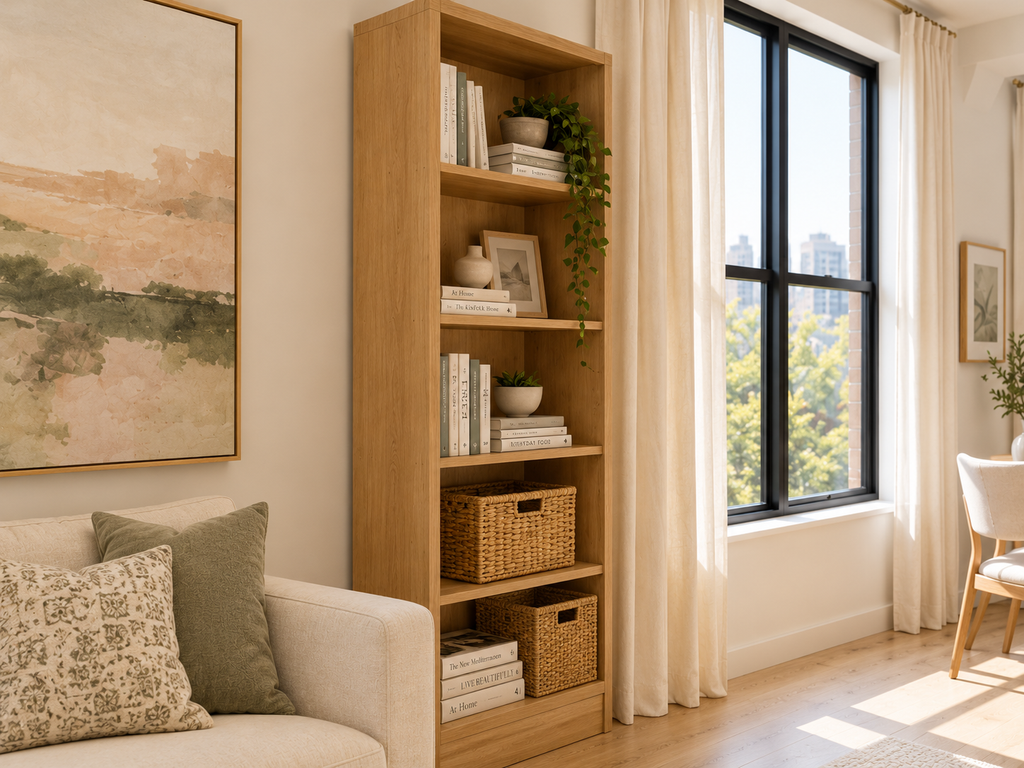
Keep the visual balance in mind. Store heavier or frequently used items lower, and place lighter baskets, books or decorative pieces higher up. Leaving a little open space between groups of objects prevents vertical storage from turning into a wall of clutter.
For more inspiration on making the most of limited space, IKEA’s guide to clever storage for small homes shares practical ways to use tall bookcases, open shelving and other storage solutions without making a room feel crowded.
3. Choose Furniture With Hidden Storage
In a small home, furniture that does more than one job earns its place. A storage ottoman can hold blankets, a bench can hide shoes, a bed with drawers can replace a bulky dresser and a coffee table with a shelf can keep remotes and magazines off the surface.
You do not need every piece of furniture to include storage. Focus on the categories that are hardest to contain, then choose one or two pieces that solve those particular problems.
4. Create a Drop Zone Near the Entrance
A small entryway can still function like a proper landing area. Even a narrow strip of wall can hold a few hooks, a compact shoe rack and a small tray for keys or sunglasses.
A good drop zone stops outside clutter from traveling through the apartment. When bags, shoes and daily essentials have a place near the door, the living room and kitchen stay noticeably calmer.
5. Make the Most of the Space Under Your Bed
Under-bed storage is one of the most useful small apartment organization ideas because it turns otherwise wasted space into practical storage. It is especially useful for items you do not need every day. Think extra bedding, seasonal clothing, luggage, gift wrap or sentimental pieces you want to keep but do not need on display.
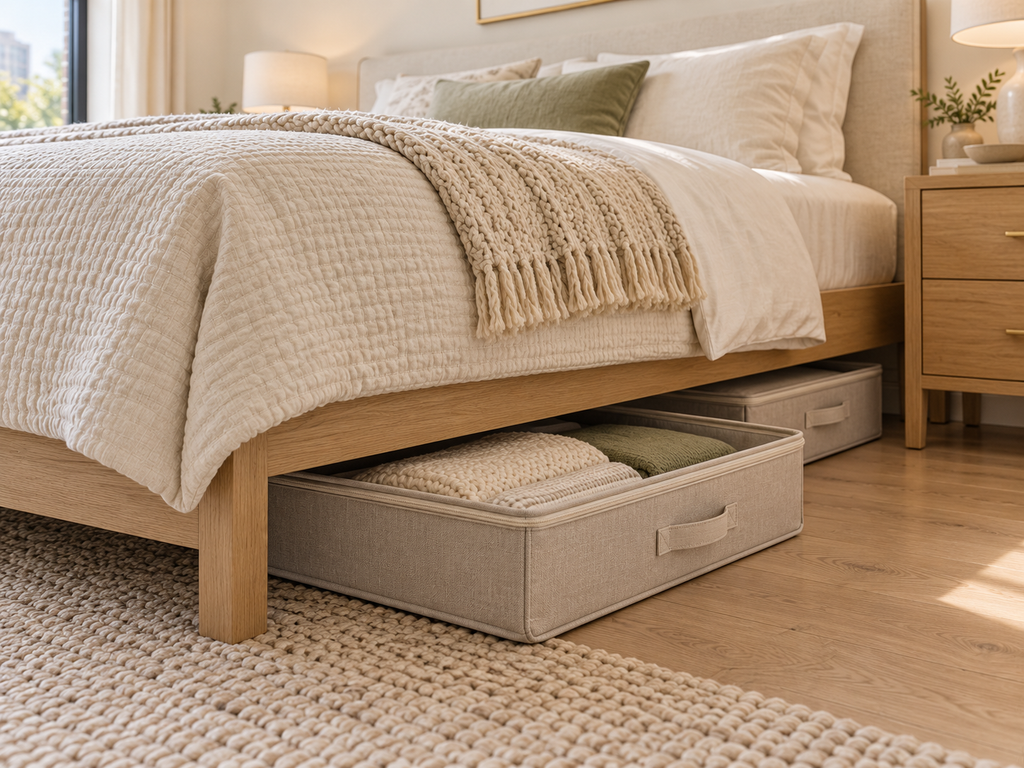
Use low containers or zippered fabric bags so everything stays protected from dust. Label the containers or keep a short note on your phone so the space stays useful instead of becoming a forgotten hiding place.
For more ways to create a restful bedroom beyond hidden storage, explore our 12 simple ways to make your bedroom feel more calm and cozy, from reducing visual clutter to choosing softer lighting and comfortable textiles.
6. Use Baskets to Contain Visual Clutter
Baskets are helpful because they turn many small objects into one calm visual shape. They work well for throws, toys, workout accessories, extra toiletries, cleaning supplies and charging cables.
Choose baskets that fit the shelf or cabinet instead of buying them first and hoping they work. Matching every basket is not necessary, but repeating a similar material or color can make open storage look more intentional.
7. Add Shelf Risers Inside Cabinets
Many cabinets waste several inches of vertical space between one shelf and the next. A simple shelf riser creates a second level for mugs, bowls, pantry items or bathroom supplies without requiring any permanent changes.
This is one of the easiest renter-friendly upgrades because it improves visibility as well as capacity. When you can see what is at the back of the cabinet, you are less likely to forget what you already own.
For more practical ways to maximize cabinet and counter space, see our 15 kitchen organization ideas for small spaces, including drawer dividers, vertical storage and simple pantry solutions.
8. Organize Drawers With Simple Dividers
A drawer can hold plenty of items and still feel frustrating if everything slides into one pile. Dividers create small zones for utensils, office supplies, makeup, socks or miscellaneous household tools.
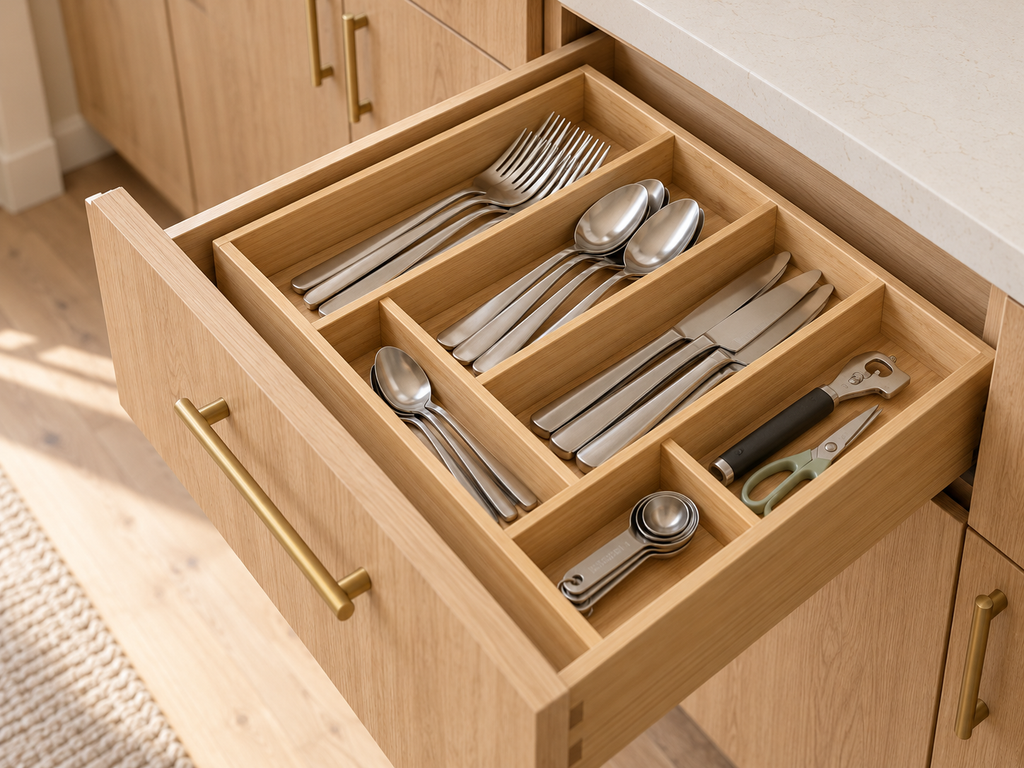
Before buying organizers, empty the drawer and remove what does not belong there. Measure the usable space, then choose inserts that match what you actually keep. The organizer should support your habits, not force you into a system that looks good only when freshly arranged.
9. Use the Back of Doors
The back of a door is often one of the most overlooked storage surfaces in a small apartment. Over-the-door hooks can hold robes, bags or hats, while slim pocket organizers are useful for shoes, toiletries, craft supplies or cleaning products.
Keep the load light enough that the door still opens comfortably. In a rental, removable or over-door options are usually easier than drilling into the door itself.
10. Think in Zones, Even in an Open-Plan Apartment
When one room has to serve several purposes, visual zones make the space easier to use. A rug can define the living area, a small cart can create a coffee station and a narrow console can separate a work corner from a lounging area.
The boundaries do not have to be physical walls. They simply tell you where certain activities and belongings belong, which makes it easier to put the room back together at the end of the day.
11. Keep Frequently Used Items Within Easy Reach
The most accessible storage should be reserved for what you use most often. Keep everyday dishes on an easy-to-reach shelf, frequently worn shoes near the door, and keys or other daily essentials in a tray on the entryway console. Daily skincare should also be within easy reach, without having to move several other containers.
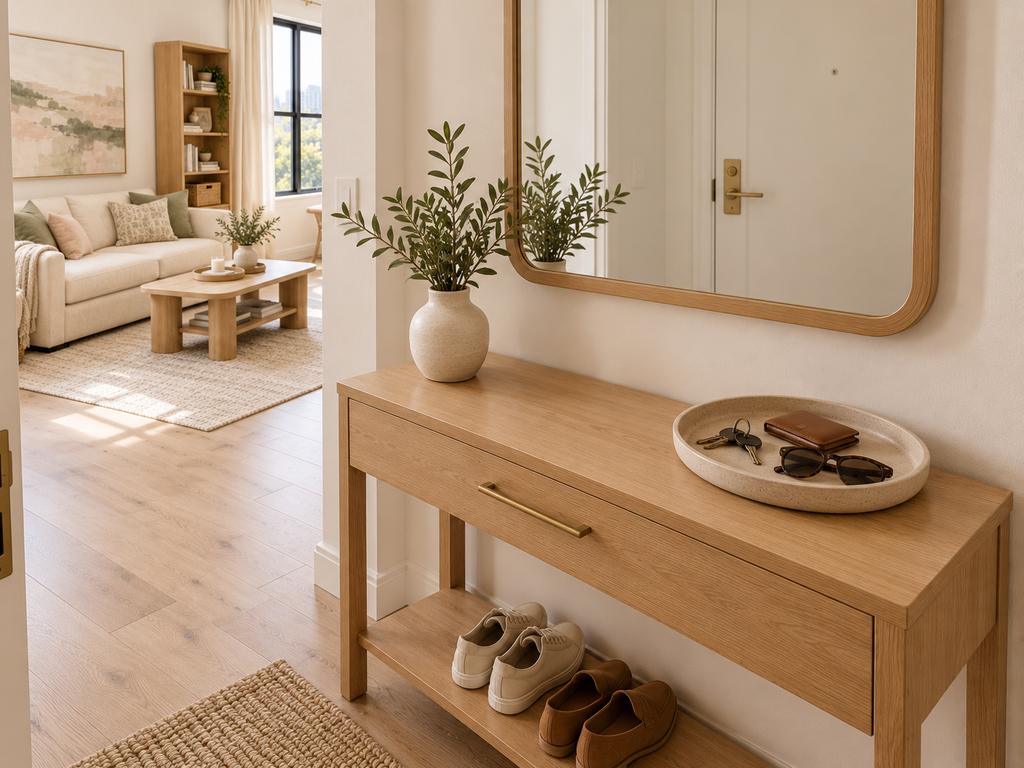
Items used only occasionally can go higher, deeper or farther away. Organizing by frequency reduces unnecessary movement and helps the home stay tidy because returning items takes less effort.
12. Store Similar Items Together
Keeping similar items in one place prevents duplicate purchases and makes it easier to see what you have. Store batteries with batteries, cleaning products together and back-up toiletries in one designated bin or shelf.
If a category is too large for the space you have assigned to it, treat that limit as useful information. It may be time to use something up, donate extras or stop buying replacements until the supply is lower.
13. Leave Some Surfaces Intentionally Empty
Every flat surface does not need to become storage. A clear section of countertop, a mostly empty nightstand or an uncluttered coffee table gives the eye somewhere to rest and makes the whole room feel more spacious.
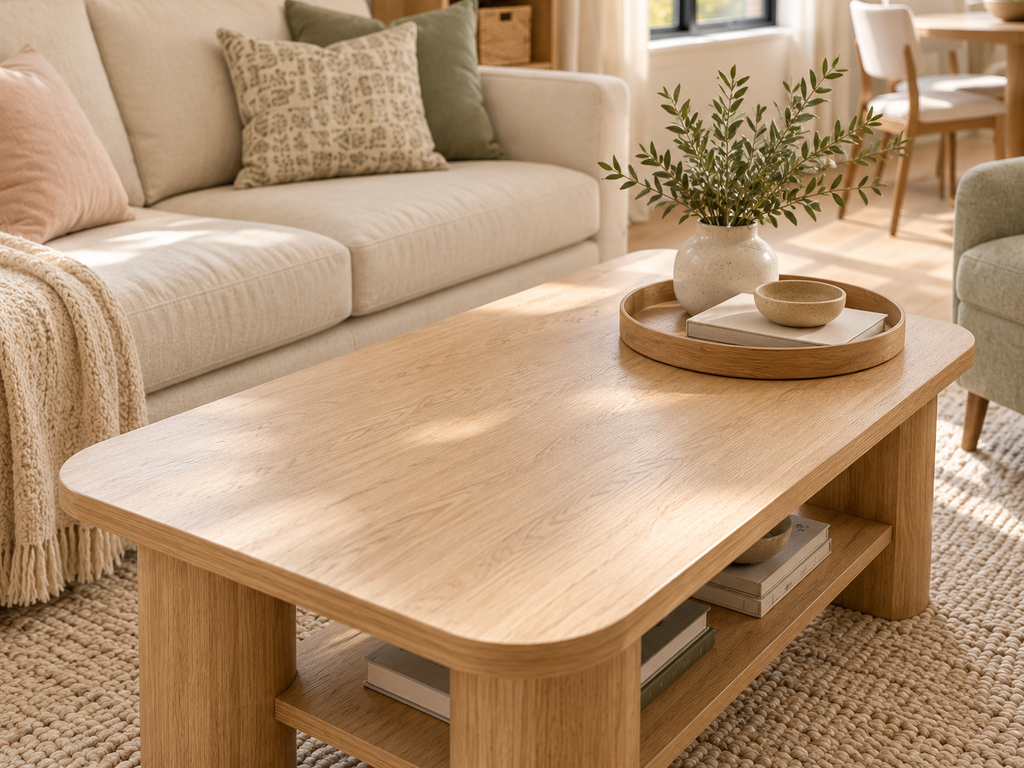
Choose which surfaces you want to protect from everyday accumulation. A simple rule such as keeping the dining table clear can have a surprisingly large effect on how orderly the apartment feels.
If you want your apartment to feel more polished without buying more decor, read our guide to 10 things that make a home look more put together for simple styling and organization tips.
14. Use Attractive Storage for Things That Stay Visible
Some storage will always be part of the room, so let it contribute to the design. A woven basket, a ceramic tray, a simple lidded box or matching glass jars can hold practical items while still looking considered.
This is especially useful in small kitchens and bathrooms, where closed cabinets may be limited. The aim is not to disguise every practical object, but to make visible storage feel calm and cohesive.
15. Create a Simple Weekly Reset Routine
Even the best organization system needs a little maintenance. Choose one short reset each week to return stray items, clear surfaces, empty old papers and put away anything that has drifted from its usual place.
Keep it realistic. Fifteen or twenty focused minutes can be more sustainable than waiting until the apartment feels overwhelming enough to require an entire afternoon. Organization works best when it supports everyday life rather than becoming another project to manage.
A Small Apartment Can Still Feel Calm
A well-organized apartment is not one where nothing is ever out of place. It is a home where putting things back is simple, storage works with your routines and the room can recover quickly after a busy day.
Start with one problem area instead of trying to transform the whole apartment in a weekend. A better entryway, a more useful cabinet or one clear countertop can change the way the space feels. Small adjustments add up, and you do not need a bigger home to create one that works beautifully for the life you are living.
These small apartment organization ideas do not require a full makeover. A few practical changes can make your home feel easier to manage, more functional and much calmer to live in every day.