
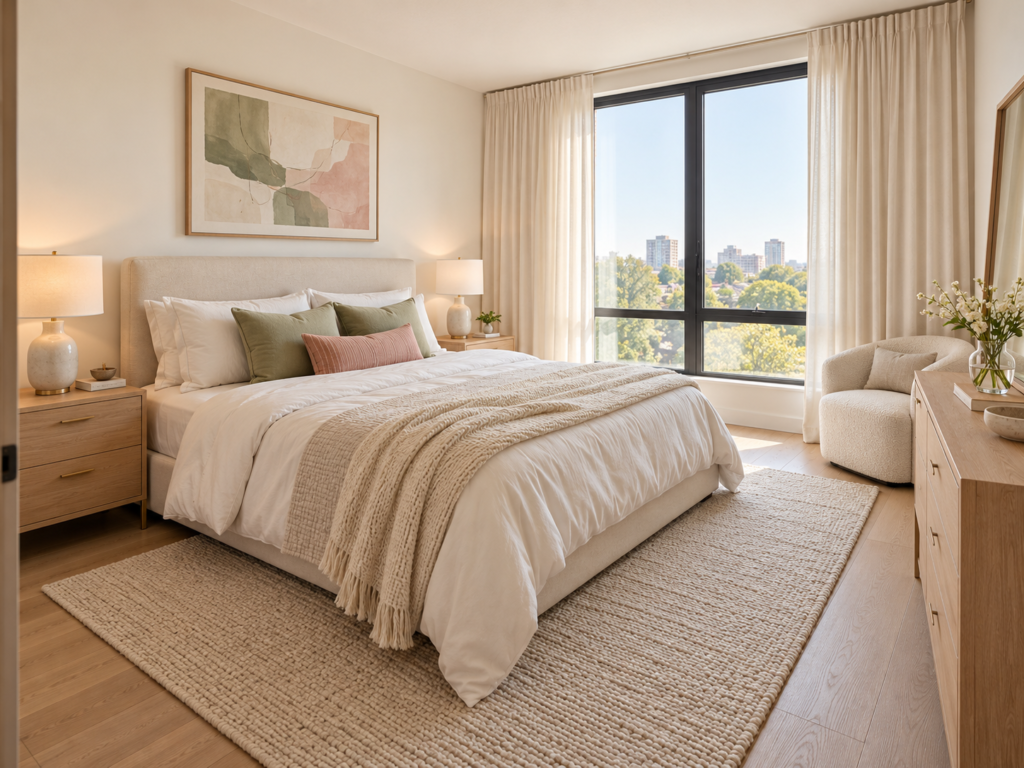
Looking for calm cozy bedroom ideas? You don’t need a large, expensive or perfectly styled bedroom to create a restful space. Often, the rooms that feel most calming are simply the ones with softer light, fewer visual distractions and comfortable details that help you unwind at the end of the day.
If your bedroom currently feels more like a storage zone than a place to unwind, you do not need to replace everything. A few thoughtful changes can shift the atmosphere quickly.
Table of Contents
1. Start With the Visual Clutter You See From Bed
Lie down or sit on the bed and notice what is directly in your line of sight. A crowded dresser, open laundry pile or stack of boxes can make the room feel mentally busy even when the rest is tidy.
Choose one visible area to simplify first. You do not need to organize the entire room for it to feel more restful.
If your bedroom feels unfinished even after tidying, our guide to making a home look more put together shares more ideas for creating a cohesive space through thoughtful styling, storage and a few simple adjustments.
2. Use Softer, Warmer Lighting
Bright overhead lighting is useful when cleaning or getting ready, but it can feel harsh at night. Add a bedside lamp, wall light or small table lamp with a warm bulb so the room can transition into evening more gently.
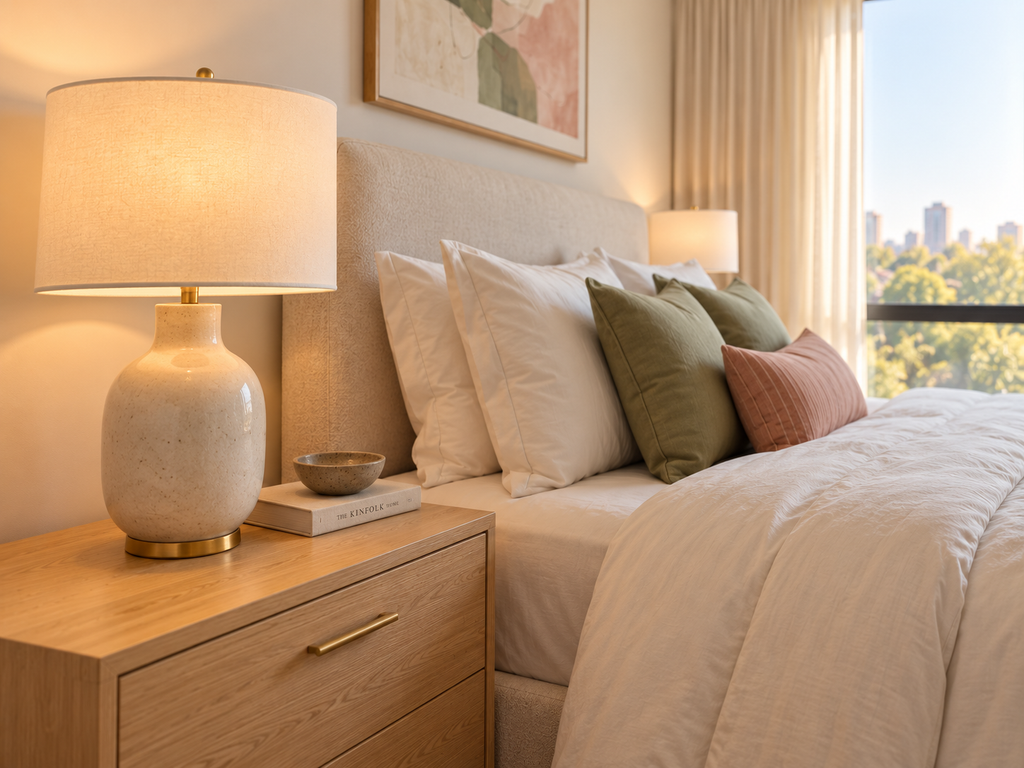
If possible, keep the brightest light for tasks and use the softer layer during the last hour before bed. For more information about creating a sleep-friendly lighting routine, Sleep Foundation explains how light exposure affects sleep and why dim, warm lighting can be useful before bedtime.
3. Keep the Bedding Simple and Comfortable
The most important quality of bedding is that it feels good to sleep in. Start with comfortable sheets and a duvet, quilt or blanket appropriate for your climate.
You can create a layered look without a mountain of decorative pillows. Two sleeping pillows, one or two additional pillows and a folded throw are often enough to make the bed feel inviting.
4. Choose a Calm Base Palette
Soft neutrals, muted colors and natural tones can create a quiet foundation, but a calm bedroom does not have to be beige. Dusty blue, muted green, soft rose or deeper earthy shades can also feel restful when used consistently.

Keep the largest surfaces relatively connected so the room does not feel visually fragmented. The best calm cozy bedroom ideas often start with a consistent color palette, making even simple furniture and everyday bedding feel thoughtfully coordinated.
5. Add Texture Before Adding More Decor
A knit throw, linen-look curtains, woven basket or textured rug can make the bedroom feel cozy without filling it with more objects.
Texture adds depth quietly, which is useful when you want warmth but also want the room to remain visually calm.
6. Give Clothes a Landing Place That Is Not the Floor
If clothes tend to collect on a chair, create a deliberate alternative. A small hook, valet stand, wall peg or designated basket can hold items you plan to wear again.

A realistic system is more useful than expecting every item to return immediately to the wardrobe.
7. Keep the Nightstand Light
A nightstand should support your evening routine without becoming another clutter surface. Keep the essentials you actually use: perhaps a lamp, water, current book and a small tray for jewelry or lip balm.
Move paperwork, chargers you do not need and miscellaneous items elsewhere so the area beside the bed feels clear.
8. Use Closed Storage for Visually Busy Items
Open shelving can be attractive, but some categories look calmer behind a door or inside a basket. Extra toiletries, cables, documents, workout accessories and small personal items are often easier on the eye when contained.
Closed storage is not about hiding life; it simply reduces the number of things competing for attention.
9. Bring In One Natural Element
A small plant, vase of branches, dried stems or natural material such as wood or rattan can soften a bedroom and keep it from feeling overly polished.
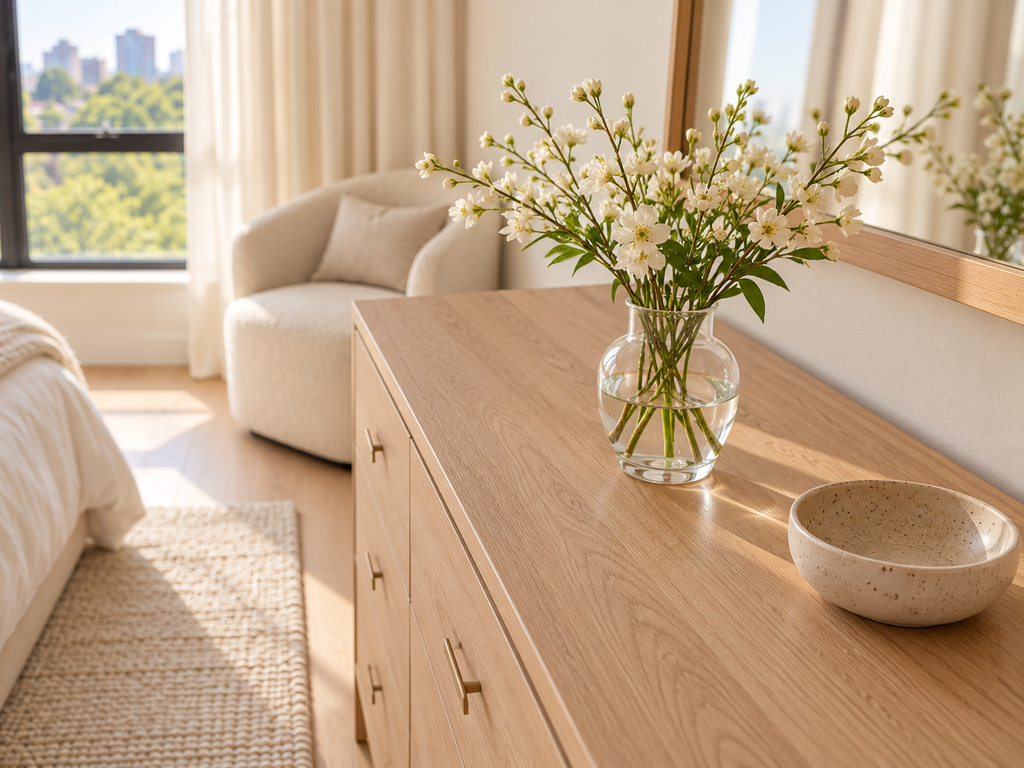
One or two natural elements are enough. You do not need to turn the room into an indoor garden for it to feel warm.
10. Soften the Windows
Curtains can reduce visual sharpness, improve privacy and make the room feel more complete. Choose panels that fall neatly and do not crowd a small window.
If you prefer a very simple look, a light-filtering shade paired with one set of curtains can give you both function and softness.
11. Keep Technology From Becoming the Focal Point
If the television, charging station or work setup dominates the room, look for small ways to reduce its visual presence. Conceal cables, use a simple charging tray or close the laptop at the end of the day.
The goal is not to ban technology. It is to keep the room from feeling permanently switched on.
12. End the Day With a Five-Minute Bedroom Reset
A quick evening reset can change how the room feels when you wake up. Put away obvious clothes, clear the nightstand, straighten the bedding and return one or two stray items to their places.
Keep the routine short enough that you will actually do it. Calm often comes from small repeated actions rather than a perfectly maintained room.
Cozy Is a Feeling, Not a Decorating Style
A calm bedroom is personal. For one person it may mean crisp white bedding and almost-empty surfaces; for another it may include books, layered textiles and deeper colors. What matters is that the room supports rest instead of asking for your attention.
Start with what you see, touch and use every evening. Softer light, comfortable bedding, less visible clutter and one manageable reset habit can make the bedroom feel noticeably more peaceful without a major makeover.