
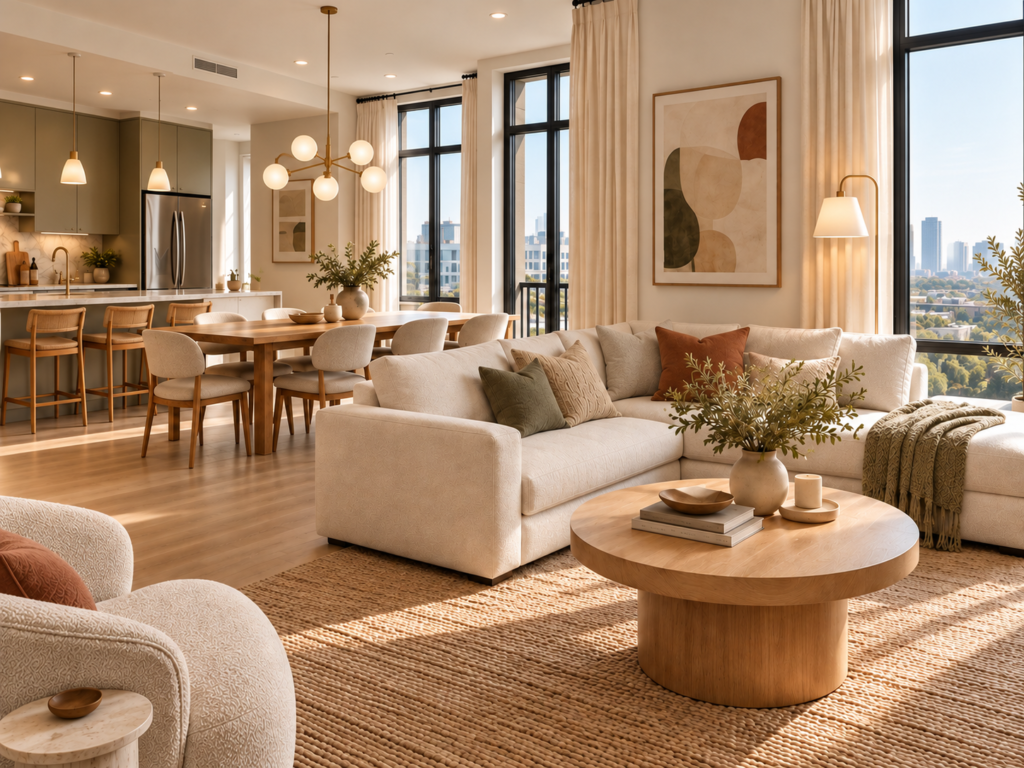
Sometimes, the simplest way to make a home look more put together is to focus on the details you already have. Consistent colors, properly scaled furniture, and uncluttered surfaces can help even an affordable space feel thoughtful and connected.
That finished feeling usually comes from a handful of small decisions rather than one dramatic makeover. If your home feels slightly unfinished, these are the details worth checking first.
Table of Contents
1. A Consistent Color Thread
Rooms feel more connected when a few colors repeat from one area to another. You might carry the same warm brown, soft green or muted blue through pillows, art, rugs and small accessories.
The colors do not need to match exactly. Repetition gives the eye familiar points to follow and is one simple way to make a home look more put together without buying matching furniture sets.
2. Curtains That Fit the Window Well
Curtains can make a room feel finished because they frame one of its largest architectural features. Panels that are long enough and hung at a flattering height tend to look more intentional than short curtains that stop awkwardly above the floor.
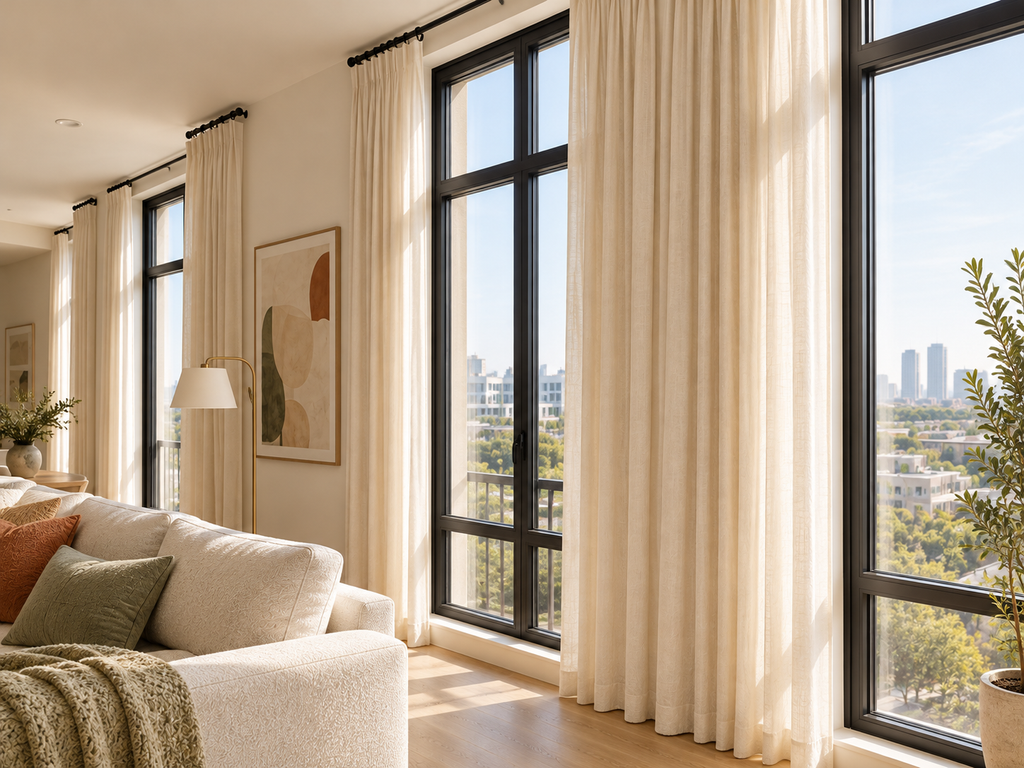
Choose simple fabric and enough fullness that the curtains still look substantial when closed.
3. Rugs That Are Large Enough
A rug helps furniture feel connected. In a living room, aim for a size that allows at least the front legs of the main seating to sit on it. In a bedroom, the rug should extend far enough beyond the bed to be visible and useful.
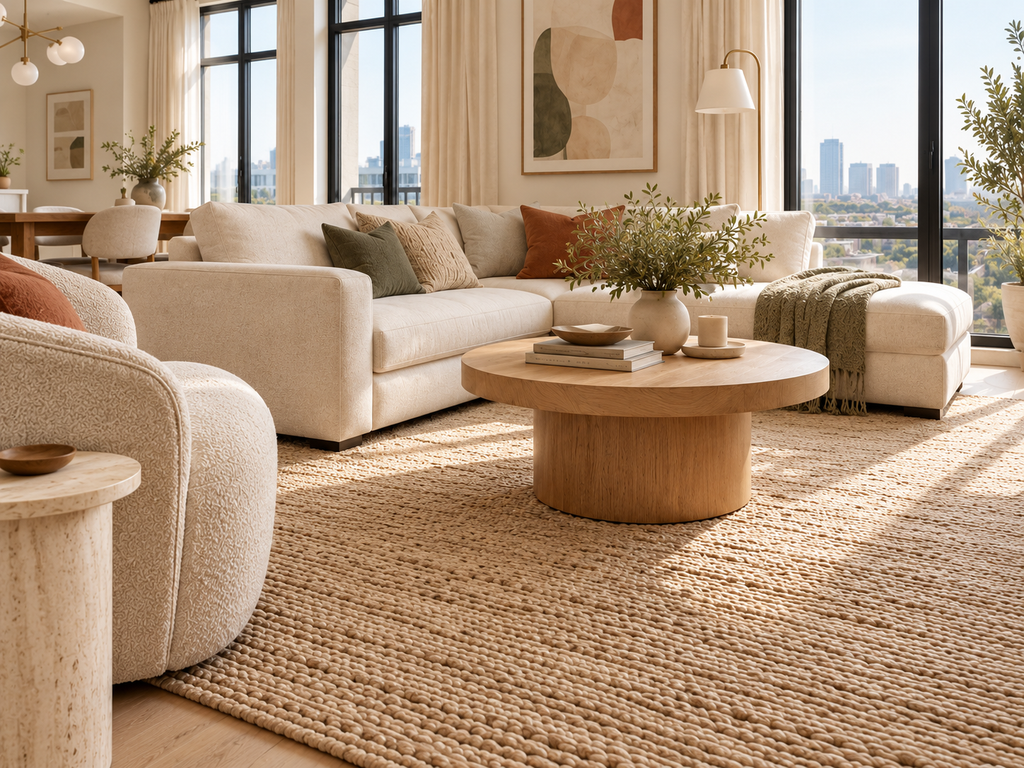
A rug that is too small can make individual furniture pieces look disconnected, even if everything else is styled well.
If you’re unsure which rug size works best for your furniture arrangement, Architectural Digest has a helpful guide to choosing the right area rug size.
4. More Than One Source of Light
A room feels more complete when lighting comes from several heights. Combine overhead lighting with a floor lamp, table lamp or wall light where possible.
Layered lighting also makes the home feel better at night, when a single bright ceiling light can flatten colors and create harsh shadows.
5. Art That Matches the Scale of the Furniture
Art often looks off not because the piece is wrong, but because the scale is too small for the wall or furniture beneath it. A larger piece above a sofa, bed or console usually feels more grounded than several tiny frames with too much empty space around them.
When using a gallery wall, treat the whole grouping as one composition and keep the spacing consistent.
6. Surfaces With a Little Breathing Room
A put-together home does not require empty surfaces, but every table and counter benefits from some open space. Edit decorative groupings so functional surfaces can still be used.
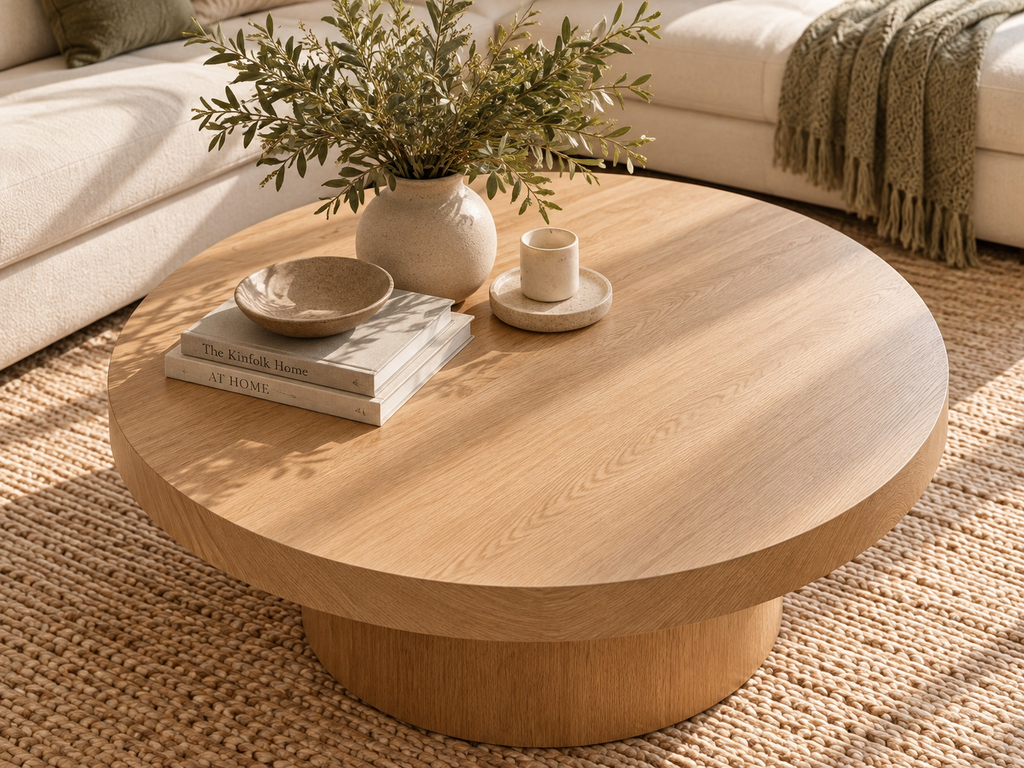
Try grouping objects in a tray or keeping decor to one side of a console. Negative space makes the objects you keep look more deliberate.
7. Everyday Clutter With a Place to Go
Homes look polished when the practical categories are easy to contain. Shoes, mail, charging cables, throws and toiletries do not have to disappear; they simply need a reliable home.
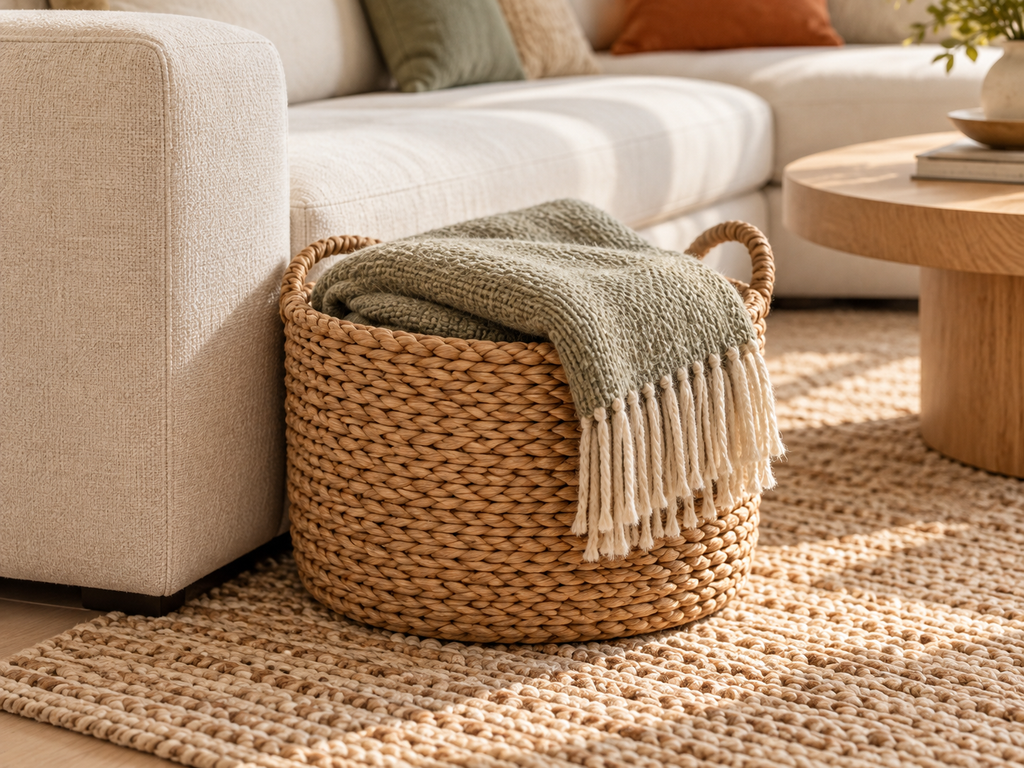
A tray, basket, drawer or hook can be enough. The best storage is often the one you can use without thinking.
If you’re working with a compact space, our 17 small living room ideas offer more ways to improve furniture placement, storage, and everyday organization.
8. Repeated Materials and Finishes
Repeating a few materials helps a room feel cohesive. If you have warm wood, black metal and cream upholstery, echo those finishes in smaller pieces rather than introducing a completely new material with every purchase.
This does not mean buying a matching furniture set. A little variation keeps the home interesting; repetition keeps it connected.
9. Textiles That Look Intentional
Pillows, throws and bedding can make a room feel styled quickly, but too many competing patterns can create visual noise. Mix texture, scale and tone rather than trying to make every textile a statement.
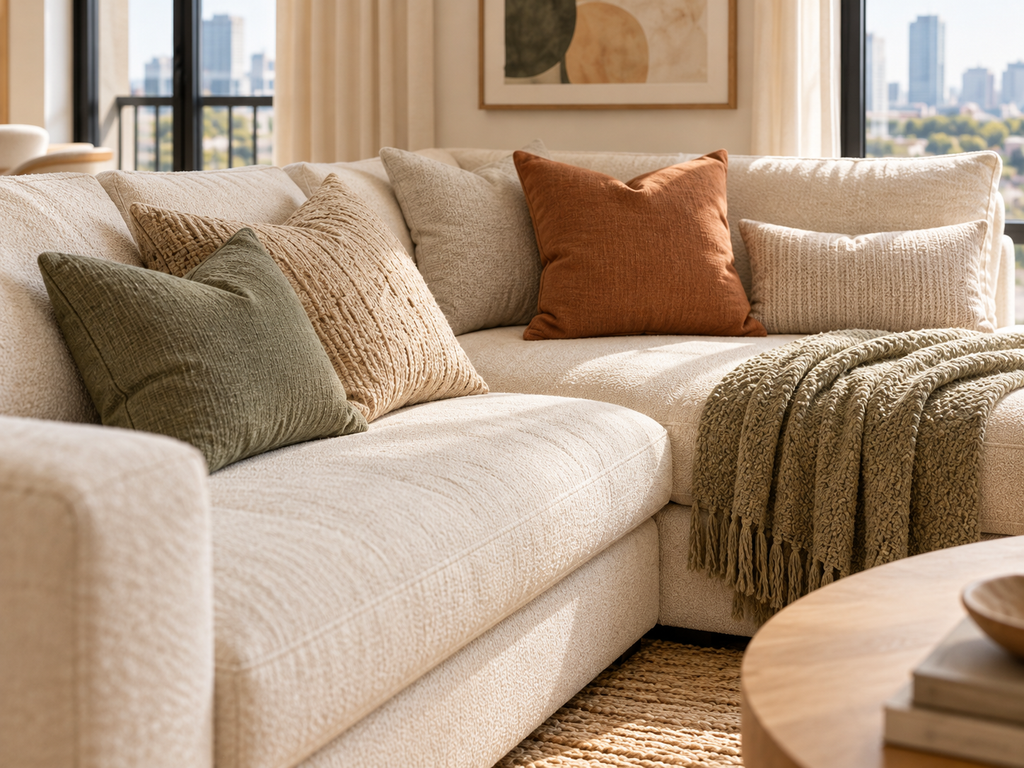
A simple combination of solid linen, subtle stripe and soft knit can create depth without making the room feel busy.
10. A Five-Minute Visual Reset
The final layer is not decor at all. Straighten the cushions, clear the main surface, fold the throw and return obvious stray items to their homes. A five-minute reset can make a home look more put together without buying anything new.
The aim is not perfection. It is simply to restore the room’s main visual lines so the design choices you have already made can be seen.
Finished Does Not Have to Mean Perfect
A home looks put together when its choices feel connected and its everyday life has somewhere to land. Scale, repetition, lighting and simple storage often make a bigger difference than buying more decor.
Before adding something new, look at what is already there. Adjust the rug, edit a surface, move a lamp or give one clutter category a proper home. Often the room needs refinement more than it needs another purchase.