
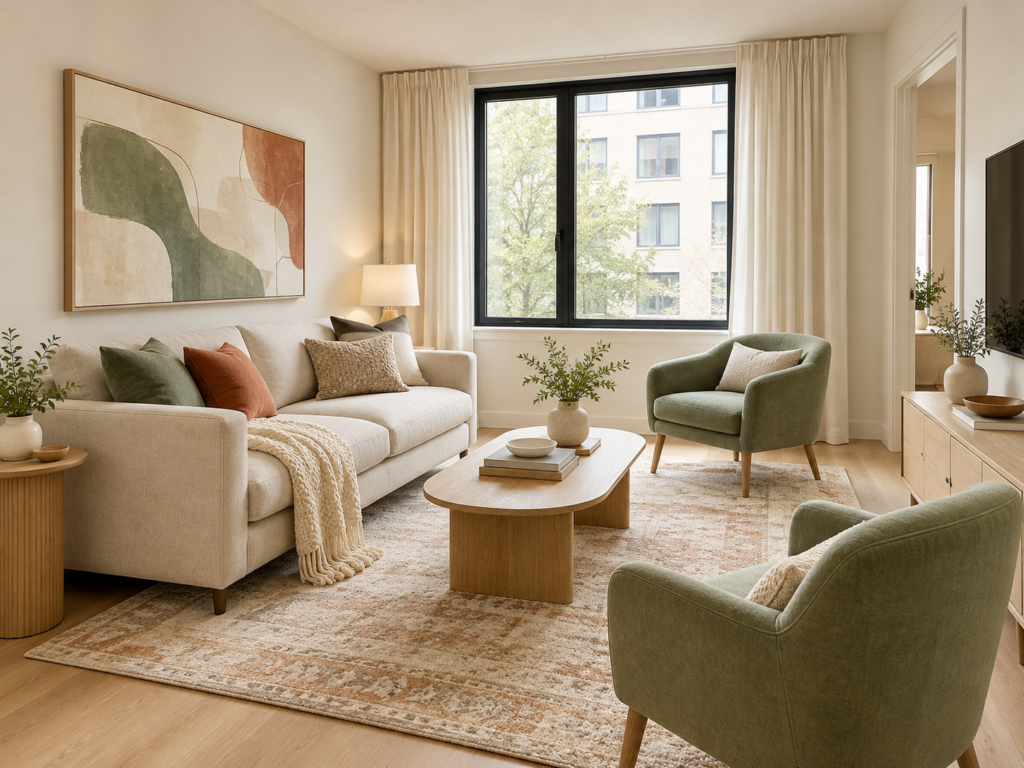
A small living room asks every choice to work a little harder. The best small living room ideas balance comfort with proportion. The sofa affects the walkway, the coffee table competes for floor space and even a few decorative objects can change whether the room feels cozy or crowded.
The goal is not to strip the room of personality. A warm, inviting small living room can still have books, art, texture and color. The difference is that the furniture, storage and decor are chosen with proportion and everyday use in mind.
Table of Contents
1. Choose the Right-Scale Sofa
A sofa does not have to be tiny, but it should leave enough room to move comfortably around the space. Measure the wall and the main walkway before shopping, and pay attention to arm width as well as overall length.
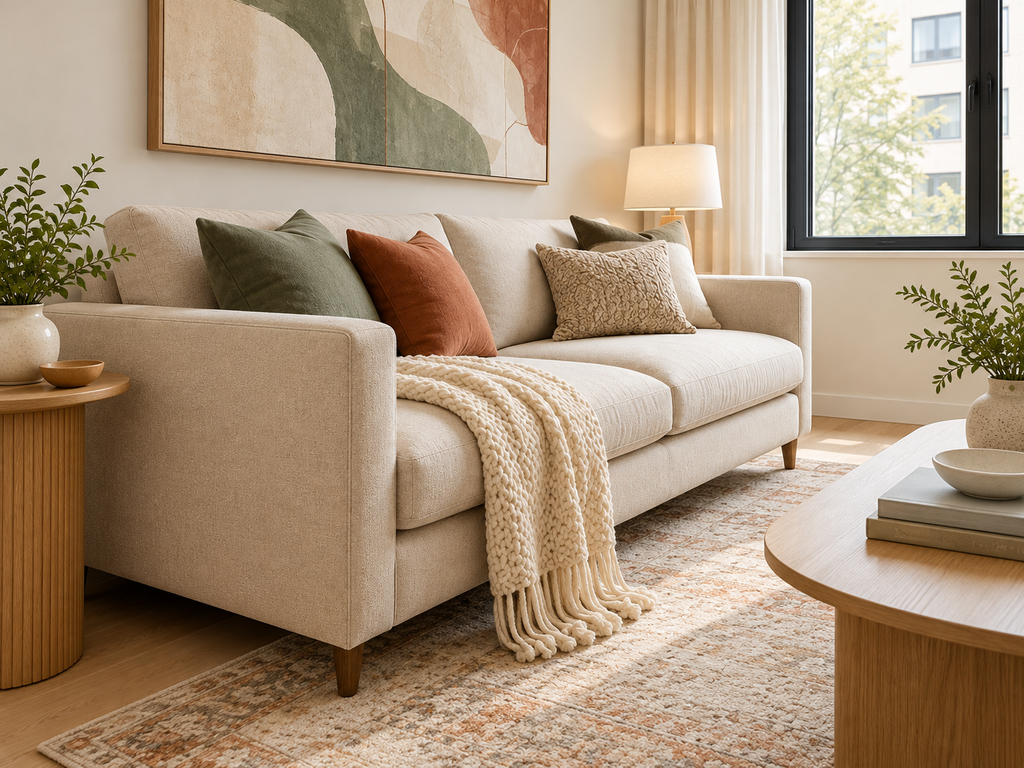
Slimmer arms and raised legs can make a sofa feel visually lighter without sacrificing seating comfort.
2. Let Furniture Breathe Away From the Walls When You Can
Pushing every piece tightly against a wall can sometimes make a room feel more cramped. If space allows, pulling the sofa forward even a few inches can create depth and make the arrangement feel intentional.
Do not force this in an extremely narrow room. The best layout is the one that preserves comfortable circulation.
3. Use One Larger Rug Instead of Several Small Ones
A generously sized rug helps the seating area read as one cohesive zone. When the front legs of the main furniture sit on the rug, the room tends to feel wider and more grounded.
Too-small rugs can visually divide the floor into little sections, which often makes a compact room feel busier.
4. Keep the Main Walkway Clear
Before adding another side table or basket, identify the path you use most often through the room. Keep that route as open as possible.
A clear walkway has an outsized effect on how spacious a room feels because you are not constantly navigating around furniture.
5. Try a Round or Oval Coffee Table
Rounded edges are useful in tight spaces because they are easier to move around and soften rooms with many straight architectural lines.
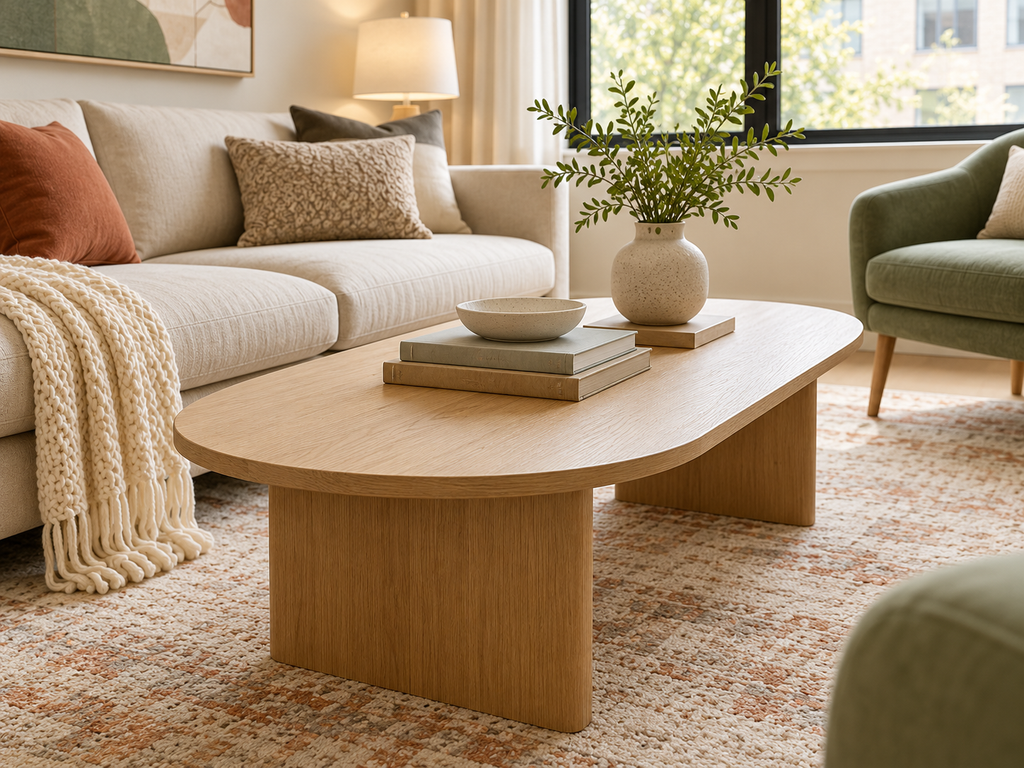
An oval table can offer useful surface area without the hard corners of a large rectangle. A small round nesting set can work well when you want flexibility.
Among the most practical small living room ideas, choosing a rounded coffee table can make everyday movement easier while keeping the seating area comfortable and functional.
6. Choose Pieces With Visible Legs
Furniture raised off the floor allows more of the flooring to remain visible, which creates a lighter visual impression. This works especially well for sofas, media consoles and side tables.
You do not need every piece to be leggy. One or two grounded items can keep the room from feeling visually flimsy.
7. Use Vertical Storage
Tall shelving makes better use of wall height and can reduce the need for multiple low storage pieces. Keep frequently used items lower and lighter decorative objects or books higher up.
Closed storage on the bottom and open shelves above can offer a useful balance between function and display.
8. Keep the Color Palette Connected
A small room feels calmer when large surfaces relate to one another. That does not mean everything should be beige. You can use color, but repeating a few tones across textiles, art and accessories creates continuity.
A connected palette helps the eye move around the room instead of stopping at every object.
9. Add Warmth With Texture Instead of More Objects
If the room feels plain, try adding texture before adding more decor. Linen curtains, a wool-look rug, woven baskets, boucle, knit throws or matte ceramics can make a space feel layered without filling every surface.
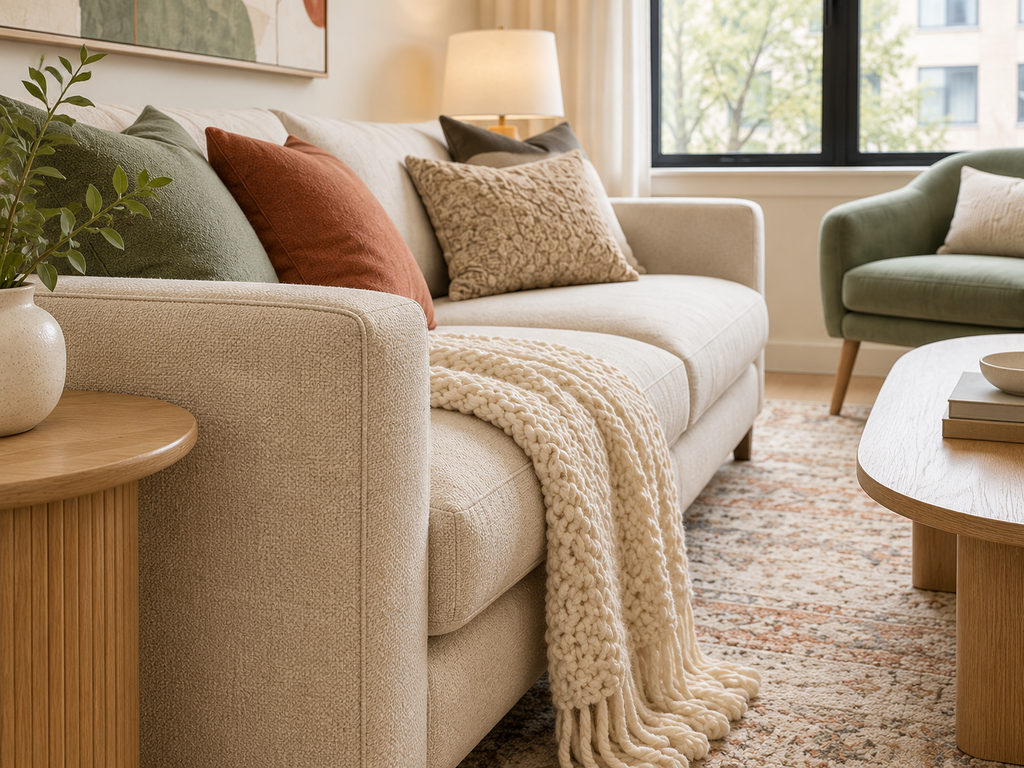
Texture is especially helpful in neutral rooms because it creates interest quietly.
10. Use Mirrors to Reflect Light Thoughtfully
A mirror can bounce natural light and create a greater sense of depth. Place it where it reflects a window, attractive view or bright section of the room rather than a cluttered corner.
One appropriately sized mirror is usually more effective than many small reflective pieces.
11. Create Closed Storage for the Messy Categories
Remote controls, cables, game accessories, paperwork and toys can make a living room look busy quickly. Give these categories closed storage in a drawer, cabinet, lidded basket or storage ottoman.
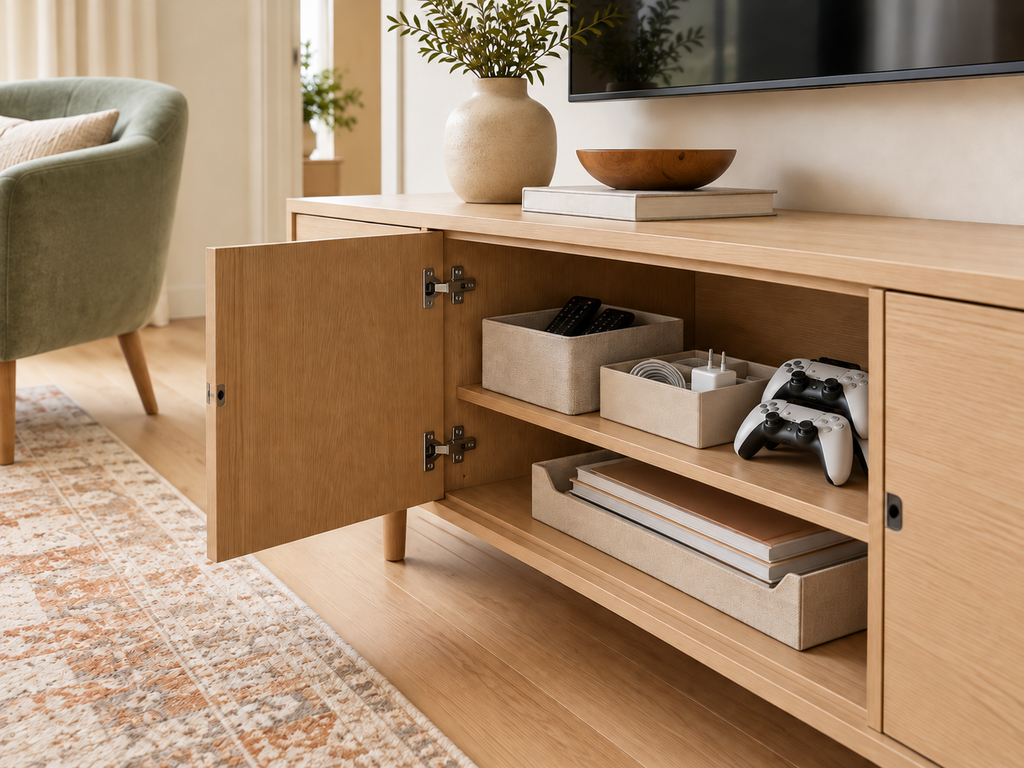
A room can still have plenty of personality when the visually noisy items are easy to put away.
For more ways to balance practical storage with thoughtful styling, IKEA’s guide to open and closed living room storage shares ideas for keeping everyday clutter contained while leaving room to display your favorite pieces.
12. Style the Coffee Table Lightly
Leave enough open space on the coffee table for a drink, laptop or snack. A small tray, one book and a simple object can be enough.
The table should support how you live in the room, not become a display you have to dismantle every evening.
13. Hang Curtains High
When practical, hanging curtains closer to the ceiling can draw the eye upward and make the room feel taller. Extending the rod beyond the window also allows more glass to remain exposed when the curtains are open.
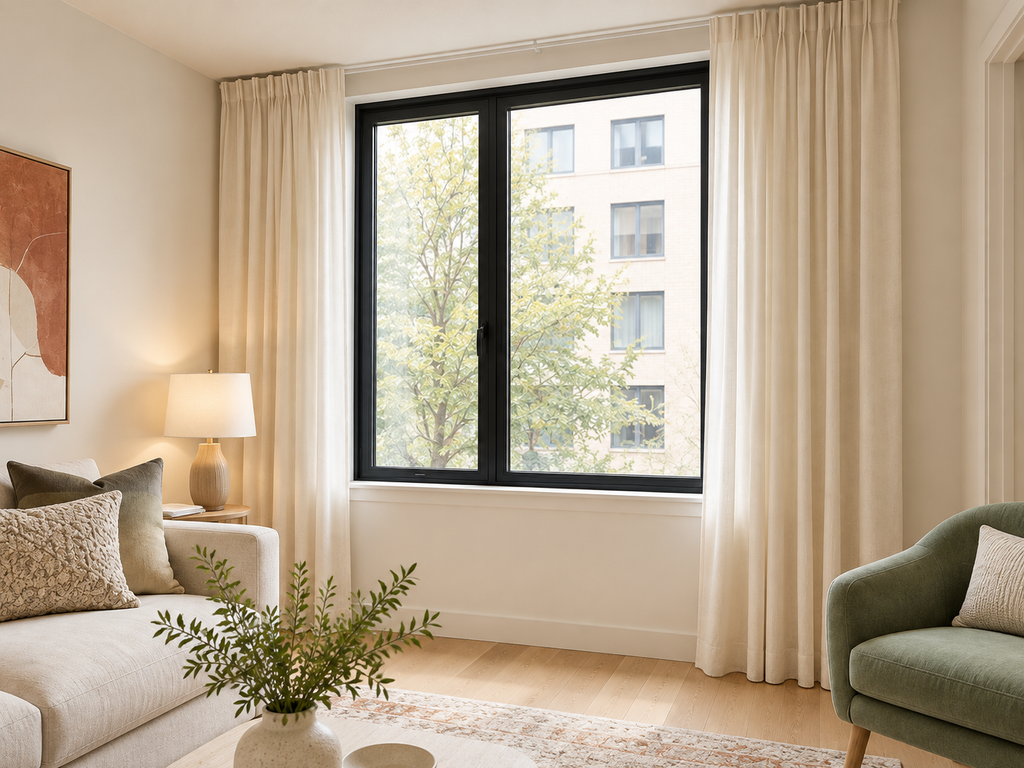
Choose a fabric with enough body to soften the room but not so much bulk that it overwhelms a small wall.
14. Layer the Lighting
A ceiling fixture alone can make a small room feel flat. Add a floor lamp or table lamp so you can create softer pools of light in the evening.
Good lighting makes a compact room feel intentional and comfortable, especially when the living area is also used for reading, working or entertaining.
15. Be Selective With Wall Decor
A small room does not need blank walls, but scale matters. One larger artwork or a restrained gallery grouping can feel calmer than many tiny pieces spread across every wall.
Leave some walls partly empty. Negative space is part of the design, not a missed opportunity.
16. Use Flexible Extra Seating
If you need occasional seating, choose pieces that can serve another purpose. A small stool can act as a side table, an ottoman can hold a tray and a compact accent chair can move between rooms.
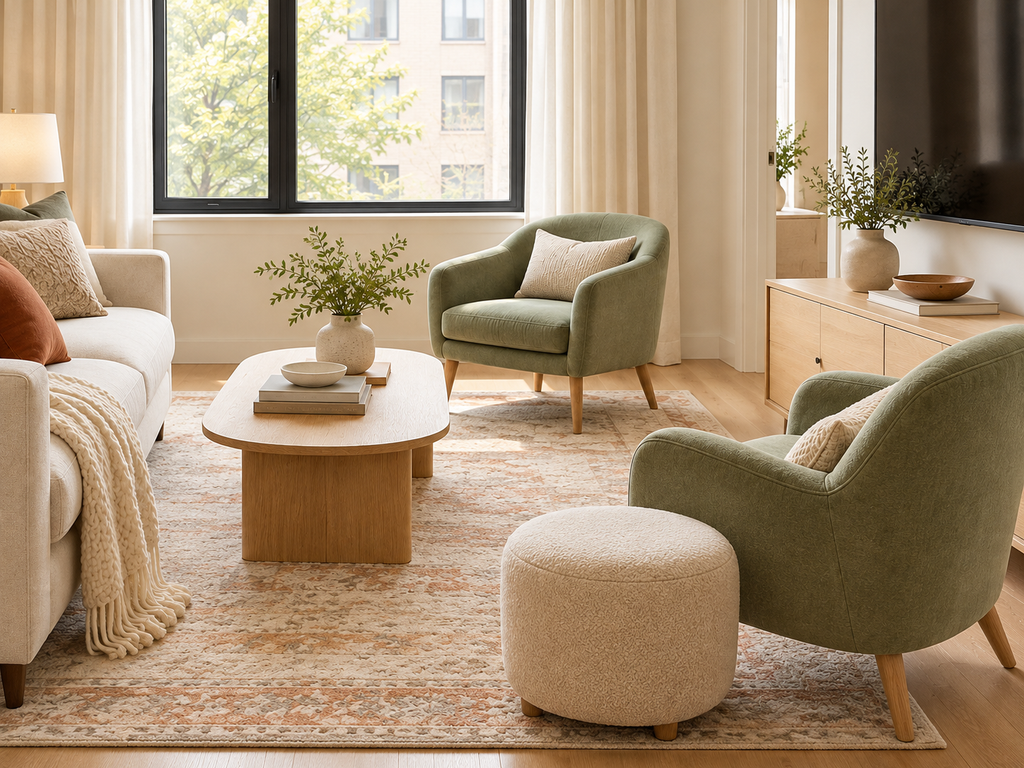
Flexible pieces keep the living room ready for guests without permanently filling the floor with furniture you rarely use.
The best small living room ideas make room for occasional guests without requiring extra furniture to take up valuable floor space every day.
17. Edit the Room by Function, Not by Minimalism
When a room feels crowded, ask whether each piece supports the way you use the space. Keep what is useful, comfortable or meaningful and reconsider items that simply occupy a corner.
The result does not have to look minimal. It should feel easy to move through, easy to reset and pleasant to spend time in.
If you’re also struggling with limited storage, explore our 15 small apartment organization ideas for practical ways to reduce clutter and make your space feel more organized.
Small Can Still Feel Generous
A small living room can feel warm and complete without being packed with furniture or stripped of character. Good proportion, clear walkways, thoughtful storage and a few layers of texture often matter more than the room’s square footage.
Work with the shape of your room and your real routines. When each piece has a purpose and there is still room to breathe, even a compact living space can feel generous.